The Tyee, an independent alternative newspaper from British Columbia, Canada, in a recent investigative series made out a case that it was time people in cities got a free ride in public transit system. Free public transport, they say, would help reduce traffic congestion, carbon emission, and, save the authorities the establishment costs involved in collecting fares, which, in some places may be more than the collection made through tickets sales.
San Francisco mayor is reported to have ordered a serious study be made of the cost of charging people to ride public transit. In New York the mayor would dream of a mass transit given away for nothing, while an awful lot is charged for bringing an automobile to the city.
Fare-free public transit is an interesting thought; might even work somewhere (Portland, Seattle). It has been tried and given up in New Jersey and Texas; and attracted the homeless (using a running train or bus as shelter) and the hooligans on board in Florida, driving away the core passengers.
For those of us in India free public transport is no one's dream. It's an academic concept that we read about in blogs or the Tyee kind of publications that investigate issues and carry viewpoints widely ignored by the big media.
Monday, July 30, 2007


Friday, July 20, 2007
Guru Dutt’s cameraman
Cinematographer V K Murthy has in him a book or two; and it is time an enterprising publisher talked to him into writing them. In a recent visit to his native Mysore (Mr Murthy is now settled in Bangalore) the man who shot Guru Dutt’s classics such as Pyaasa, Kagaz ke Phool, and Sahib, Bibi aur Gulam spoke of his life and times with famed director in Bombay.
Mr Murthy who gave up his schooling in Mysore and violin lessons to go to Bombay in search of work in visual media was with Guru Dutt for much of his career. Following the death of the latter Mr Murthy worked with directors such as Pramod Chakraborthy, Shyam Benegal and Govind Nihalani. But Mr Murthy is best known in the film industry for his association with Guru Dutt.
Perhaps, no one else has better credentials to do a definitive biography on the late director. So close to him was Mr Murthy, it is said that every time Guru Dutt had attempted suicide the first call from the director’s household went to Mr Murthy. As he put it, “whenever the call came…I would run to his house and rush him to the hospital”. When it happened the third time Mr Murthy’s efforts failed. Guru Dutt died.
In response to a query whether Kaagaz Ka Phool was autobiogrphical Mr Murthy is reported to have observed, “It looks like that….It almost seems like he rehearsed before actually committing suicide”.
Mr Murthy who gave up his schooling in Mysore and violin lessons to go to Bombay in search of work in visual media was with Guru Dutt for much of his career. Following the death of the latter Mr Murthy worked with directors such as Pramod Chakraborthy, Shyam Benegal and Govind Nihalani. But Mr Murthy is best known in the film industry for his association with Guru Dutt.
Perhaps, no one else has better credentials to do a definitive biography on the late director. So close to him was Mr Murthy, it is said that every time Guru Dutt had attempted suicide the first call from the director’s household went to Mr Murthy. As he put it, “whenever the call came…I would run to his house and rush him to the hospital”. When it happened the third time Mr Murthy’s efforts failed. Guru Dutt died.
In response to a query whether Kaagaz Ka Phool was autobiogrphical Mr Murthy is reported to have observed, “It looks like that….It almost seems like he rehearsed before actually committing suicide”.
Wednesday, July 18, 2007
Why this fuss over Mysore Utsav?
Thought we’re in a free country where anyone is free to organize a utsav; and anyone else is free to oppose it.Which, in a democracy, is the prerogative of opposition netas. Shouldn’t we, the freedom-loving citizens, recognise the right of a bunch of political has-beens to protest the upcoming Mysore Utsav (July 26-29)? I only wish they raise objections that are credible.
The opponents of proposed utsav say 1)it is an attempt to dim the glory of Mysore Dasara; and 2) it is not proper to hold the utsav at a time when farmers are facing financial hardship. No, these objections are not my invention. They are credited to a former minister Mr H Vishwanath. Equally inventive is the justification the utsav organizers trot out for holding the four-day festival – “to foster a great tradition, culture and heritage of the royal city”.
And what have they lined up to uphold this heritage? Free screening of Rajkumar films, a fashion show to promote Mysore silk, a kite-flying event and filmy music by Shaan and Udit Narayan. Sure, they would be fun. But I’m not sure if these cinema-based events help “foster a great tradition and culture”. And there is no mention of involvement of the person who has a very personal stake in sustaining the city’s royal image. Mr Wadyar and the palace appears nowhere in the organisers' scheme of things.
Instead, someone who anchors TV programmes, Mr Deepak Thimmaiah, held forth at a Hotel Metropole press meet in the run-up to the Mysore Utsav. Insisting that it is a purely private affair, Mr Thimmaiah spoke of the initiative being taken by the minister in charge of Mysore district, Mr G T Deve Gowda. Presumably, there is no contradiction or clash of interests here; and presumably,there is nothing in the ministerial code of conduct precluding Mr Gowde from proactive participation in a privately sponsored mega mela.
Considering that the utsav is likely to cost at least Rs.2.5 crores it makes business sense to involve someone with official clout to attract sponsors. According to Mr Thimmaiah, the four-day utsav will be managed and marketed by TV House (rather naïve of me not to have heard of such corporate entity) If better known companies are sponsoring the event, the spokesman didn’t mention them at the Metropole press conference.
The Hindu reports that the mega event is being opposed by many political parties because they reckon it would “affect the prospects of Dasara”. I have a theory on the prospects of Dasara 2007. Prevailing uncertainty over Janata Dal (Secular) intentions regarding its commitment to hand over the government to BJP this October is bound to impact the plans for the state-sponsored Dasara. For the city corporation and some departments such as public works, tourism, horticulture Dasara is all about grants. Last year these departments had put in demands for nearly Rs. 25 crores. They have reason to be concerned about allocations this year. Lower grants; not much of Dasara.
The opponents of proposed utsav say 1)it is an attempt to dim the glory of Mysore Dasara; and 2) it is not proper to hold the utsav at a time when farmers are facing financial hardship. No, these objections are not my invention. They are credited to a former minister Mr H Vishwanath. Equally inventive is the justification the utsav organizers trot out for holding the four-day festival – “to foster a great tradition, culture and heritage of the royal city”.
And what have they lined up to uphold this heritage? Free screening of Rajkumar films, a fashion show to promote Mysore silk, a kite-flying event and filmy music by Shaan and Udit Narayan. Sure, they would be fun. But I’m not sure if these cinema-based events help “foster a great tradition and culture”. And there is no mention of involvement of the person who has a very personal stake in sustaining the city’s royal image. Mr Wadyar and the palace appears nowhere in the organisers' scheme of things.
Instead, someone who anchors TV programmes, Mr Deepak Thimmaiah, held forth at a Hotel Metropole press meet in the run-up to the Mysore Utsav. Insisting that it is a purely private affair, Mr Thimmaiah spoke of the initiative being taken by the minister in charge of Mysore district, Mr G T Deve Gowda. Presumably, there is no contradiction or clash of interests here; and presumably,there is nothing in the ministerial code of conduct precluding Mr Gowde from proactive participation in a privately sponsored mega mela.
Considering that the utsav is likely to cost at least Rs.2.5 crores it makes business sense to involve someone with official clout to attract sponsors. According to Mr Thimmaiah, the four-day utsav will be managed and marketed by TV House (rather naïve of me not to have heard of such corporate entity) If better known companies are sponsoring the event, the spokesman didn’t mention them at the Metropole press conference.
The Hindu reports that the mega event is being opposed by many political parties because they reckon it would “affect the prospects of Dasara”. I have a theory on the prospects of Dasara 2007. Prevailing uncertainty over Janata Dal (Secular) intentions regarding its commitment to hand over the government to BJP this October is bound to impact the plans for the state-sponsored Dasara. For the city corporation and some departments such as public works, tourism, horticulture Dasara is all about grants. Last year these departments had put in demands for nearly Rs. 25 crores. They have reason to be concerned about allocations this year. Lower grants; not much of Dasara.
Friday, June 29, 2007
Roping in Bollywood for Hillary campaign?
Read in the media that some US resident Indians are planning to rope in Bollywood stars for the Clinton campaign. Thought our biradari in the US had more sense. I can understand their enthusiasm for the US presidential race. But getting Bollywood stars to campaign for Hillary appears a corny idea. Does anyone really believe Amitabh Bacchan or Rani Mukherjee can sway the electorate? Indian-Americans account for less than one percent of the US population.
I can understand Bollywood stars doing a door-to-door in Mumbai to collect old clothes and cash for flood or quake relief. Involving them in a poll campaign, even in India, has been little more than a media hype. In the recent UP elections the Samajwadi Party featured Amitabh Bacchan in TV promos. The super-star probably was more effective flogging Dabur Chyawanprash on TV.
I can’t see Shahrukh Khan or that Zinta girl campaigning for Hillary at community centres in the US suburbs and the gurudwara Sunday congregations. Whoever has thought of drafting Bollywood star may be having in mind a song-and-dance programme as fund-raiser . Which is old hat. Besides, live shows of filimy item numbers may no longer be the money-spinners they once were. Someone mentioned a recent Asha Bhonsle concert bombed, insofar as there were hardly a thousand people in a venue that could hold ten times that number. One reason is that they are too many of them, held much too often, featuring the same old faces.
A report in NRIPulse.com speaks of plans by Indian Americans to raise at least $5 million for the Hillary Clinton presidential campaign. For her senate bid the New York Indian community had chipped in $50,000. Accepting the gift, at a fund-raiser held by a Maryland dentist, Rajwant Singh, Hillary had reportedly joked, “I can certainly run for a senate seat in Punjab and win easily”. At a more recent fund-raiser in San Jose, a participant identified as director of a Mumbai-based tech firm is reported as saying, “If Bill Clinton ran for president or prime minister in India, he’d win”.
Hillary Clinton spoke at the Maryland fund-raiser what her Indian audience wanted to hear. But her folksy talk hasn’t evidently gone down well with the Americans, for whom India has come to be identified with one word – ‘outsourcing’. The point is, in her bid for Indian-Americans' support, Hillary may stand to lose more votes than she might gain. Her opponents are making an issue of the Clintons’ apparent closeness to India and Indians.
A recent newspaper headline said, ‘Clintons’ support to Indian companies deserves attention’. The media article, by Newsday columnist James P Pinkerton, reasons that America under Hillary wouldn’t be such a good idea. As he put it, if Hillary could cruise to the Democratic nomination, and perhaps, the presidency, ‘American jobs will continue to cruise to India’.
In Pinkerton’s reckoning the Clintons seem to have, what he terms, ‘unnaturally close connections’ with foreign companies interested in draining American jobs. “Shouldn’t this be of interest to Americans”, asks the columnists, and answers his own question, “but the mainstream media seem to say no”.
To further his point Pinkerton says Bill Clinton has invested $50,000 in an India-based electronic-transactions company. He has accepted $300,000 in speaking fees from Cisco Systems, which, among other enterprises, helps American companies outsource jobs to India.
The flaw in Pinkerton’s piece is in its statistics. The columnist cites an economist’s projection that “40 million American jobs could be lost to outsourcing in coming decades”. How many decades? That is not made clear in Pinkerton’s commentary.
Cross-posted in Desicritics and Zine5
I can understand Bollywood stars doing a door-to-door in Mumbai to collect old clothes and cash for flood or quake relief. Involving them in a poll campaign, even in India, has been little more than a media hype. In the recent UP elections the Samajwadi Party featured Amitabh Bacchan in TV promos. The super-star probably was more effective flogging Dabur Chyawanprash on TV.
I can’t see Shahrukh Khan or that Zinta girl campaigning for Hillary at community centres in the US suburbs and the gurudwara Sunday congregations. Whoever has thought of drafting Bollywood star may be having in mind a song-and-dance programme as fund-raiser . Which is old hat. Besides, live shows of filimy item numbers may no longer be the money-spinners they once were. Someone mentioned a recent Asha Bhonsle concert bombed, insofar as there were hardly a thousand people in a venue that could hold ten times that number. One reason is that they are too many of them, held much too often, featuring the same old faces.
A report in NRIPulse.com speaks of plans by Indian Americans to raise at least $5 million for the Hillary Clinton presidential campaign. For her senate bid the New York Indian community had chipped in $50,000. Accepting the gift, at a fund-raiser held by a Maryland dentist, Rajwant Singh, Hillary had reportedly joked, “I can certainly run for a senate seat in Punjab and win easily”. At a more recent fund-raiser in San Jose, a participant identified as director of a Mumbai-based tech firm is reported as saying, “If Bill Clinton ran for president or prime minister in India, he’d win”.
Hillary Clinton spoke at the Maryland fund-raiser what her Indian audience wanted to hear. But her folksy talk hasn’t evidently gone down well with the Americans, for whom India has come to be identified with one word – ‘outsourcing’. The point is, in her bid for Indian-Americans' support, Hillary may stand to lose more votes than she might gain. Her opponents are making an issue of the Clintons’ apparent closeness to India and Indians.
A recent newspaper headline said, ‘Clintons’ support to Indian companies deserves attention’. The media article, by Newsday columnist James P Pinkerton, reasons that America under Hillary wouldn’t be such a good idea. As he put it, if Hillary could cruise to the Democratic nomination, and perhaps, the presidency, ‘American jobs will continue to cruise to India’.
In Pinkerton’s reckoning the Clintons seem to have, what he terms, ‘unnaturally close connections’ with foreign companies interested in draining American jobs. “Shouldn’t this be of interest to Americans”, asks the columnists, and answers his own question, “but the mainstream media seem to say no”.
To further his point Pinkerton says Bill Clinton has invested $50,000 in an India-based electronic-transactions company. He has accepted $300,000 in speaking fees from Cisco Systems, which, among other enterprises, helps American companies outsource jobs to India.
The flaw in Pinkerton’s piece is in its statistics. The columnist cites an economist’s projection that “40 million American jobs could be lost to outsourcing in coming decades”. How many decades? That is not made clear in Pinkerton’s commentary.
Cross-posted in Desicritics and Zine5
Saturday, June 23, 2007
NRI Parents ’kick-off’ meet: A non-starter?
I was half-hour late for the meet and Sandeep Chauhan, convenor of the Bay Area Indian Parents Association (IPA), was waiting at the parking lot, presumably, wondering if I would make it at all. He had reasons to be concerned because only one other member in our 38-strong Yahoo Group had turned up. The occasion was IPA’s kick-off meet at Santa Clara, California. From the turnout it appeared a non-starter.
Sandeep wasn’t going to admit failure. The three of us pretended as if it was business as usual and went ahead with the meeting, while a less determined lot would have called it off for want of a quorum. However, we had one thing going for us - a family cheer group of two males, three females and the eight-month old Yash, grandson of a founder member, Mr Y K Gupta.
His family and mine sat through the meet, and even participated in the hour-long proceedings. It was a meeting that set a record of sorts. No association or group can claim to have held its constituent meeting with an observer so young as Yash, who endearingly stretched himself out on the table to reach out for the papers, on which Sandeep was recording the minutes. The meet convenor coped with the intervention by bribing the child with a cardboard box for Yash to play with.
Our e-group, no more than three weeks old, comprises a few visiting NRI parents and many concerned NRIs who want to make their parents’ stay in the US an engaging and sociable experience. Mr Gupta echoed the sentiments of many NRI parents when he said that the only reason that brought him and his wife to America was their son and daughter. The Guptas have been here five times, and their stay follows a predictable pattern – excitement of being with their loved young ones for the first few weeks, followed by several weeks, punctuated by yawning activity-gaps when ‘time-pass’ becomes an issue.
The IPA is a social initiative to evolve a support-group approach to the ‘time-pass’ issue. Sandeep suggested periodical weekday neighborhood community lunch at someone’s place or the local park, for visiting NRI parents, at which stay-at-home moms could pool in their home-cooked dishes.
The idea of creating a databank of members was discussed. Someone suggested county-wise directory of NRIs, like the one they once had in Phoenix, Ariz. (no one was sure if it is still being maintained). On our part, it was agreed we should start with a databank of our Yahoo Group. Sandeep raised privacy concerns, involved in online disclosure of postal address and phone numbers of the group members. We settled for collection of bare minimum data such as county of residence, age, areas of interest so that folk living within one another’s easy reach could arrange to have their own ‘do’s’.
As a visiting NRI parent I suggested we mention the city we come from (Mysore). This could give an additional focus of contact among visiting NRI parents; and also help some of them sustain their contacts even after they return to India. On the privacy issue I am among those who believe that transparency is a key pre-requisite for social networking among visiting NRI parents. Of the 38 Yahoo group members I find no more than 11 have chosen to declare online their name, age, and location. I don’t find it encouraging, or even worthwhile, to interact with a bunch of unnamed persons, about whom I know nothing other than ‘encrypted’ e-mail ID.
When I raised this point one of our young friends mentioned spammers, privacy concerns, risk of revealing online one’s name, location and other contact details. I can understand such concerns of a few who may be vulnerable to a threat of harassment. Having been a blogger for some years now I get exposed to spamming, online cranks and hate-mailers. Yet, I haven’t felt the need to adopt a phony online identity.
I can't speak for young working NRIs, but I wonder what privacy concerns visiting NRI parents can have; particularly, in a place where they are unknown and go unsung. The whole point of IPA, I reckon, is to help NRI parents emerge out their social self-exile and engage themselves in meaningful group activities.
Cross-filed in Zine5 and Desicritics
Sandeep wasn’t going to admit failure. The three of us pretended as if it was business as usual and went ahead with the meeting, while a less determined lot would have called it off for want of a quorum. However, we had one thing going for us - a family cheer group of two males, three females and the eight-month old Yash, grandson of a founder member, Mr Y K Gupta.
His family and mine sat through the meet, and even participated in the hour-long proceedings. It was a meeting that set a record of sorts. No association or group can claim to have held its constituent meeting with an observer so young as Yash, who endearingly stretched himself out on the table to reach out for the papers, on which Sandeep was recording the minutes. The meet convenor coped with the intervention by bribing the child with a cardboard box for Yash to play with.
Our e-group, no more than three weeks old, comprises a few visiting NRI parents and many concerned NRIs who want to make their parents’ stay in the US an engaging and sociable experience. Mr Gupta echoed the sentiments of many NRI parents when he said that the only reason that brought him and his wife to America was their son and daughter. The Guptas have been here five times, and their stay follows a predictable pattern – excitement of being with their loved young ones for the first few weeks, followed by several weeks, punctuated by yawning activity-gaps when ‘time-pass’ becomes an issue.
The IPA is a social initiative to evolve a support-group approach to the ‘time-pass’ issue. Sandeep suggested periodical weekday neighborhood community lunch at someone’s place or the local park, for visiting NRI parents, at which stay-at-home moms could pool in their home-cooked dishes.
The idea of creating a databank of members was discussed. Someone suggested county-wise directory of NRIs, like the one they once had in Phoenix, Ariz. (no one was sure if it is still being maintained). On our part, it was agreed we should start with a databank of our Yahoo Group. Sandeep raised privacy concerns, involved in online disclosure of postal address and phone numbers of the group members. We settled for collection of bare minimum data such as county of residence, age, areas of interest so that folk living within one another’s easy reach could arrange to have their own ‘do’s’.
As a visiting NRI parent I suggested we mention the city we come from (Mysore). This could give an additional focus of contact among visiting NRI parents; and also help some of them sustain their contacts even after they return to India. On the privacy issue I am among those who believe that transparency is a key pre-requisite for social networking among visiting NRI parents. Of the 38 Yahoo group members I find no more than 11 have chosen to declare online their name, age, and location. I don’t find it encouraging, or even worthwhile, to interact with a bunch of unnamed persons, about whom I know nothing other than ‘encrypted’ e-mail ID.
When I raised this point one of our young friends mentioned spammers, privacy concerns, risk of revealing online one’s name, location and other contact details. I can understand such concerns of a few who may be vulnerable to a threat of harassment. Having been a blogger for some years now I get exposed to spamming, online cranks and hate-mailers. Yet, I haven’t felt the need to adopt a phony online identity.
I can't speak for young working NRIs, but I wonder what privacy concerns visiting NRI parents can have; particularly, in a place where they are unknown and go unsung. The whole point of IPA, I reckon, is to help NRI parents emerge out their social self-exile and engage themselves in meaningful group activities.
Cross-filed in Zine5 and Desicritics
Thursday, June 14, 2007
US jail food, not quite the Hilton standard
I didn’t know, or care, what they serve for lunch to inmates in California jails till San Francisco Chronicle ran a story on it. Frankly, I wasn’t thinking about jail food till Paris Hilton got locked up in a Los Angeles county jail for drunk-driving. The way the US media fussed over the custody saga creates an impression that the food they serve Ms. Hilton in jail is a matter of national concern.
Where this celebrity kid is interned they serve inmates cold cereal, hard-boiled eggs and a beverage for breakfast; it is ham or cheese sandwich, fruit, Jell-O and cookies for lunch. Dinner has to be a hot meal – steak or macaroni and cheese, vegetables and dessert. And Paris doesn’t touch anything other than cereal and bread. So says SF Chronicle.
In the San Francisco jail, the food is reportedly prepared under supervision by Aramark, a food services provider whose clients include schools, professional clubs and ball-barks. Besides overseeing the jail kitchen, Aramark is said to train prisoners in cookery. Michael Buffington, a catering company founder who has been chef in some famous hotel kitchens, had graduated from the San Francisco jail, where he served time in 1992 for cocaine possession and driving under influence.
Where this celebrity kid is interned they serve inmates cold cereal, hard-boiled eggs and a beverage for breakfast; it is ham or cheese sandwich, fruit, Jell-O and cookies for lunch. Dinner has to be a hot meal – steak or macaroni and cheese, vegetables and dessert. And Paris doesn’t touch anything other than cereal and bread. So says SF Chronicle.
In the San Francisco jail, the food is reportedly prepared under supervision by Aramark, a food services provider whose clients include schools, professional clubs and ball-barks. Besides overseeing the jail kitchen, Aramark is said to train prisoners in cookery. Michael Buffington, a catering company founder who has been chef in some famous hotel kitchens, had graduated from the San Francisco jail, where he served time in 1992 for cocaine possession and driving under influence.
Wednesday, June 06, 2007
An ode to RG
Heard about RG’s death in Bangalore from fellow journalist M R Venkatesh. Chennai-based Telegraph correspondent, MRV, is a rare species in the media that retains relationship with me even years after my retirement. R Gopalakrishnan of The Hindu was a common friend and colleague, known for accurate notes-taking at press conferences and getting the 'quotes' right. I know this, for I have relied on RG’s notes when I had doubts about my own speed-writing at press conferences we have attended together.
Reproduced here is the e-mail MRV sent me on RG:
Could Karma’s Taal
And ‘Rebirth’s dance
Turn a little comical
When similar mortal frames
Are seen on a Contemporary screen?
That’s how Language
Drew a picture
On the mind’s slate,
When years back
I first met ‘RG’,
As the self-effacing soul
R.Gopalakrishnan was fondly known
To friends even outside ‘The Hindu’,
Oh! He seems
Bengal’s great genial actor
Utpal Dutt
Reborn on a same Time scale!
Almost Everything about ‘RG’,
The gait and the cigarette,
Spectacle drooping and studied,
Deep Intellectual anger
Soaring like summer-time mercury,
To the rollicking laughter
That blazoned a Child-like innocence,
Looked an Utpal Dutt reprint!
But soon I discovered,
All these were only the
Bodily chariot
Reined in by a deeper Soul
That ‘RG’ came to signify,
Economics, Marxism
Sociology et all,
Were the rims of a
Rollercoaster ride
With a journalistic leg
On Each side,
His voice of Peace
That climaxed against
Pokhran-Two,
His abiding faith
That the down and under
See Secularism as Naturalism
Came as enduring light
Before his Soul flew away!
- M R Venkatesh/Chennai/ June 5, 2007 (After Hearing
of RG’s Death at Bangalore)
Cross-filed in Desicritics
- and Zine5
Reproduced here is the e-mail MRV sent me on RG:
Could Karma’s Taal
And ‘Rebirth’s dance
Turn a little comical
When similar mortal frames
Are seen on a Contemporary screen?
That’s how Language
Drew a picture
On the mind’s slate,
When years back
I first met ‘RG’,
As the self-effacing soul
R.Gopalakrishnan was fondly known
To friends even outside ‘The Hindu’,
Oh! He seems
Bengal’s great genial actor
Utpal Dutt
Reborn on a same Time scale!
Almost Everything about ‘RG’,
The gait and the cigarette,
Spectacle drooping and studied,
Deep Intellectual anger
Soaring like summer-time mercury,
To the rollicking laughter
That blazoned a Child-like innocence,
Looked an Utpal Dutt reprint!
But soon I discovered,
All these were only the
Bodily chariot
Reined in by a deeper Soul
That ‘RG’ came to signify,
Economics, Marxism
Sociology et all,
Were the rims of a
Rollercoaster ride
With a journalistic leg
On Each side,
His voice of Peace
That climaxed against
Pokhran-Two,
His abiding faith
That the down and under
See Secularism as Naturalism
Came as enduring light
Before his Soul flew away!
- M R Venkatesh/Chennai/ June 5, 2007 (After Hearing
of RG’s Death at Bangalore)
Cross-filed in Desicritics
- and Zine5
Friday, May 25, 2007
Remembering Chittaranjan
It wasn’t his anniversary day. Nor was it a day of remembrance for media veterans. Yet his daughter and I had him on our minds; spent a few tear-filled moments, remembering the late C N Chittaranjan, when we met at a concert hall in Sunnyvale, C A, last Saturday.
The occasion was a carnatic vocal music concert by Chittaranjan’s grand-daughter, Kavita. It was my first social outing during my current US visit. “I get a feeling that my own father has graced this occasion,” said Girija Radhakrishnan, tears welling up in her eyes. I was rendered speechless. Girija, who has everything going for her had one regret in life - that her father Chittaranjan didn’t visit her in the US.
CNC (as he was known in the media and among friends) was a kind of journalist who rarely took time off from work. He lived for journalism. He once told me that after he had his three daughters married, and well settled in life, he felt he ccould no longer be accused of neglecting his family for his profession; he felt a sense of legitimacy in devoting his undivided attention to work. He had provided for a modest income from savings and a small house in Chennai for his wife after he would be gone.
He died in New Delhi. In his later years CNC’s prime concern in life was to be able to bring out Mainstream on time, every week. Apart from writing editorial CNC commissioned articles (for which no payment was usually made); and spent at least two late evenings a week at a smelly, noisy printing press at Jhandewalan, going through page proofs. The man had a heart condition.
Mr Chittaranjan was a rare newspaper editor who didn’t own a vehicle, and used to travel by bus. This was in the 80s, when travelling in a Delhi Transport Corporation bus was no Sunday picnic. He remained a man with a common touch, though he rose to senior editorial positions in Hindustan Times and Patriot, and to be editor of National Herald. CNC had always the welfare of journalists at heart. His involvement with the interests of journalists did not always endear him with newspaper managements. In The Indian Express, Madras, he took on the then mighty media baron Ramnath Goenka, who had at one time threatened to shut down the Madras edition.
CNC led the workers’ agitation, for which he had to spend time in jail. Later he moved to New Delhi to join Hindustan Times. When Patriot and Link was started in the sixties (by Dr. A V Baliga, Aruna Asaf Ali, V K Krishna Menon and Edatatta Narayanan), as an alternate media to counter monopoly houses, CNC was invited to join the editorial staff.
In the profession he was several years my senior; in life, he became a family friend, helping me along to get a break during my down-and-out years. CNC re-hired me in The National Herald, New Delhi, ignoring the management policy not to take back anyone who had quit the paper, that too, barely an year earlier. Later, when CNC fell out with the National Herald management he put in a word for me at The Times of India, where I had the longest stint in any single newspaper (20 years) during my four decades in journalism.
Irony was that CNC, who had helped several others to make it big in their careers, was himself happy to be working for lesser dailies on relatively modest pay and no perks. After he left the editorship of The National Herald CNC went back to Mainstream, whose founder-editor Nikhil Chakravarti relied entirely on CNC to run the journal.
It was during these days we met every other evening at his place or the Chopra tea stall near our residences in Karolbagh; and talked mainly of his current editorial concerns at Mainstream, or discussed the topic for his next magazine article. After my transfer to Bhopal as TOI correspondent in the early 80s, I never got to meet him. Several years later, when I was posted in Chennai, I got a call one morning that CNC was no more.
I couldn't attend the funeral; nor could I make a subsequent trip to New Delhi to convey my condolences to his family. Those were eventful days for journalists covering Tamilnadu, and I couldn’t find myself getting away from the daily grind of newspaper reporting, even for a week. I knew CNC would have understood my situation. As a die-hard media person, CNC wouldn’t have had me miss my assignments, even if it was for his own funeral.
Cross-filed in Zine5 and Desicritics.
The occasion was a carnatic vocal music concert by Chittaranjan’s grand-daughter, Kavita. It was my first social outing during my current US visit. “I get a feeling that my own father has graced this occasion,” said Girija Radhakrishnan, tears welling up in her eyes. I was rendered speechless. Girija, who has everything going for her had one regret in life - that her father Chittaranjan didn’t visit her in the US.
CNC (as he was known in the media and among friends) was a kind of journalist who rarely took time off from work. He lived for journalism. He once told me that after he had his three daughters married, and well settled in life, he felt he ccould no longer be accused of neglecting his family for his profession; he felt a sense of legitimacy in devoting his undivided attention to work. He had provided for a modest income from savings and a small house in Chennai for his wife after he would be gone.
He died in New Delhi. In his later years CNC’s prime concern in life was to be able to bring out Mainstream on time, every week. Apart from writing editorial CNC commissioned articles (for which no payment was usually made); and spent at least two late evenings a week at a smelly, noisy printing press at Jhandewalan, going through page proofs. The man had a heart condition.
Mr Chittaranjan was a rare newspaper editor who didn’t own a vehicle, and used to travel by bus. This was in the 80s, when travelling in a Delhi Transport Corporation bus was no Sunday picnic. He remained a man with a common touch, though he rose to senior editorial positions in Hindustan Times and Patriot, and to be editor of National Herald. CNC had always the welfare of journalists at heart. His involvement with the interests of journalists did not always endear him with newspaper managements. In The Indian Express, Madras, he took on the then mighty media baron Ramnath Goenka, who had at one time threatened to shut down the Madras edition.
CNC led the workers’ agitation, for which he had to spend time in jail. Later he moved to New Delhi to join Hindustan Times. When Patriot and Link was started in the sixties (by Dr. A V Baliga, Aruna Asaf Ali, V K Krishna Menon and Edatatta Narayanan), as an alternate media to counter monopoly houses, CNC was invited to join the editorial staff.
In the profession he was several years my senior; in life, he became a family friend, helping me along to get a break during my down-and-out years. CNC re-hired me in The National Herald, New Delhi, ignoring the management policy not to take back anyone who had quit the paper, that too, barely an year earlier. Later, when CNC fell out with the National Herald management he put in a word for me at The Times of India, where I had the longest stint in any single newspaper (20 years) during my four decades in journalism.
Irony was that CNC, who had helped several others to make it big in their careers, was himself happy to be working for lesser dailies on relatively modest pay and no perks. After he left the editorship of The National Herald CNC went back to Mainstream, whose founder-editor Nikhil Chakravarti relied entirely on CNC to run the journal.
It was during these days we met every other evening at his place or the Chopra tea stall near our residences in Karolbagh; and talked mainly of his current editorial concerns at Mainstream, or discussed the topic for his next magazine article. After my transfer to Bhopal as TOI correspondent in the early 80s, I never got to meet him. Several years later, when I was posted in Chennai, I got a call one morning that CNC was no more.
I couldn't attend the funeral; nor could I make a subsequent trip to New Delhi to convey my condolences to his family. Those were eventful days for journalists covering Tamilnadu, and I couldn’t find myself getting away from the daily grind of newspaper reporting, even for a week. I knew CNC would have understood my situation. As a die-hard media person, CNC wouldn’t have had me miss my assignments, even if it was for his own funeral.
Cross-filed in Zine5 and Desicritics.
Monday, May 07, 2007
Felicitations to my online friend
We live in the same town, Mysore; about three km apart. We have known each other for some two years. We belong to a vanished species of journalists of the typing and shorthand era. We have a lot in common and much to share about our media days in the 60s and the 70s. And yet we hadn't met each other, till Sunday last.
Such is the marvel of the Net. The technology that brings together people spread across the geographical divide can also obviate the need for even neighbors to meet, face-to-face, to be able to stay in touch. Who needs to meet when e-mail, v-mail and Skype could speak. And my friendship with Mr Krishna Vattam is strengthened with every e-mail we exchange, with every chat on the old–fashioned telephone.
My friend has turned 75; and felicitation would be in order. In fact, there was a public felicitation function, about which I learnt, true to form, through the web, after the event. Presumably, the man was much too modest to inform me, as yet an unmet friend, about a public 'do' in his honour. But then the morning after the event, to my surprise, Mr Vattam called to ask if we could meet. We did, and talked about, of all things, Krishna Menon, as if we were picking up the thread from where we had left it in our ongoing online communication.
He referred to D R Mankakar's 'Guilty Men of 1962' and his clumsiness in using the web software, to post a comment on my recent blog post. Here we were, meeting for the first time, and all that we could find to talk about was Menon, Nehru, Rajaj, and about the Emergency. If we were excited about our first ever face-to-face, neither he nor I wanted to betray our child-like excitement, particularly in the presence of his teenage grand-daughter Mr Vattam had brought along with him.
We talked about the blissful unfamiliarity of even some of our today's media folk with India's recent history. Mr Vattam spoke of L K Advani's Mysore visit, at which he told the local media about his imprisonment in Bangalore during the Emergency years (1975-77). After the press meet, said Mr Vattam, he was asked by a young reporter, in all innocence, why Mr Advani was jailed. If at all our youth know of what went on during the emergency, their knowledge is limited to what they saw in Sudhir Mishra's movie, Hazaaron Kwaishen Aisi.
Mr Vattam left a copy of the felicitation volume brought out on the occasion of his 75 th birthday; his completion of 56 years in journalism. His father was a journalist. So is his son. Presumably, media is in the Vattams' DNA. Reading through felicitation volume I learnt Mr Vattam had watched the Telugu movie, 'Malleshwari', 54 times. Wonder who kept the count, and why he stopped short of 55.
He is the founder of a local support group called 'Ex-cancer Patients' Association', to build-up self-confidence and dispel that lingering fear of relapse among the recovered patients. Mr Vattam is a cancer survivor. The next time I meet him, I must remember to loan him my copy of Stewart Alsop's Stay of Execution, in which the Newsweek columnist describes, without sentimentality, what it meant to live with lethal cancer and survive to tell the tale.
Cross-filed in zine5 and Desicritics.
Such is the marvel of the Net. The technology that brings together people spread across the geographical divide can also obviate the need for even neighbors to meet, face-to-face, to be able to stay in touch. Who needs to meet when e-mail, v-mail and Skype could speak. And my friendship with Mr Krishna Vattam is strengthened with every e-mail we exchange, with every chat on the old–fashioned telephone.
My friend has turned 75; and felicitation would be in order. In fact, there was a public felicitation function, about which I learnt, true to form, through the web, after the event. Presumably, the man was much too modest to inform me, as yet an unmet friend, about a public 'do' in his honour. But then the morning after the event, to my surprise, Mr Vattam called to ask if we could meet. We did, and talked about, of all things, Krishna Menon, as if we were picking up the thread from where we had left it in our ongoing online communication.
He referred to D R Mankakar's 'Guilty Men of 1962' and his clumsiness in using the web software, to post a comment on my recent blog post. Here we were, meeting for the first time, and all that we could find to talk about was Menon, Nehru, Rajaj, and about the Emergency. If we were excited about our first ever face-to-face, neither he nor I wanted to betray our child-like excitement, particularly in the presence of his teenage grand-daughter Mr Vattam had brought along with him.
We talked about the blissful unfamiliarity of even some of our today's media folk with India's recent history. Mr Vattam spoke of L K Advani's Mysore visit, at which he told the local media about his imprisonment in Bangalore during the Emergency years (1975-77). After the press meet, said Mr Vattam, he was asked by a young reporter, in all innocence, why Mr Advani was jailed. If at all our youth know of what went on during the emergency, their knowledge is limited to what they saw in Sudhir Mishra's movie, Hazaaron Kwaishen Aisi.
Mr Vattam left a copy of the felicitation volume brought out on the occasion of his 75 th birthday; his completion of 56 years in journalism. His father was a journalist. So is his son. Presumably, media is in the Vattams' DNA. Reading through felicitation volume I learnt Mr Vattam had watched the Telugu movie, 'Malleshwari', 54 times. Wonder who kept the count, and why he stopped short of 55.
He is the founder of a local support group called 'Ex-cancer Patients' Association', to build-up self-confidence and dispel that lingering fear of relapse among the recovered patients. Mr Vattam is a cancer survivor. The next time I meet him, I must remember to loan him my copy of Stewart Alsop's Stay of Execution, in which the Newsweek columnist describes, without sentimentality, what it meant to live with lethal cancer and survive to tell the tale.
Cross-filed in zine5 and Desicritics.
Friday, May 04, 2007
The way we are
(Sourced from news reports in The Hindu dated May 4)
The not-so-fresh fruits and vegetables sold at the Horticulture Produce Marketing and Processing Cooperative Society (HOPCOMS) retail outlets and the apparent ‘unfriendly’ behavior of salespersons have been driving away customers.
A legal team representing, two Karnataka ministers, appearing before the Lokayukta said the ministers could not file the details (regarding assets for 2004-05) in time because of the fault of their personal staff.
A Bangalore city corporation official, referring to their programme to seal open manholes, observed that metal lids worth Rs.750 each were often found missing.
A 60-year-old maid in Bangalore, claiming back wages for 11 months from her employer filed a complaint with the Labour Dept. one year back. She has yet to get her dues.
Chief minister H D Kumaraswamy (at a public function in Tumkur district) said officials seemed to believe that his government was about to fall and (therefore) were neglecting their duties.
Rasheed, Hyderabad travel agent alleged to have got fake travel documents for several politicians maintained he was innocent – “I have done what people asked me to do; I have not done anything on my own…”.
The not-so-fresh fruits and vegetables sold at the Horticulture Produce Marketing and Processing Cooperative Society (HOPCOMS) retail outlets and the apparent ‘unfriendly’ behavior of salespersons have been driving away customers.
A legal team representing, two Karnataka ministers, appearing before the Lokayukta said the ministers could not file the details (regarding assets for 2004-05) in time because of the fault of their personal staff.
A Bangalore city corporation official, referring to their programme to seal open manholes, observed that metal lids worth Rs.750 each were often found missing.
A 60-year-old maid in Bangalore, claiming back wages for 11 months from her employer filed a complaint with the Labour Dept. one year back. She has yet to get her dues.
Chief minister H D Kumaraswamy (at a public function in Tumkur district) said officials seemed to believe that his government was about to fall and (therefore) were neglecting their duties.
Rasheed, Hyderabad travel agent alleged to have got fake travel documents for several politicians maintained he was innocent – “I have done what people asked me to do; I have not done anything on my own…”.
Wednesday, May 02, 2007
Has our media gone celebrity-berserk ?
The Abhi-Ash wedding coverage in our media has driven the Tirupathi temple management board to review its treatment of visiting Bollywood celebrities and businessmen. They can no longer count on a walk-in darshan, special puja and extra laddu - the privileges extended to the PM, the CMs, Governors and visiting state dignitaries.
NDTV, in a prime-time news bulletin the other day, showed a video-clip of the celebrity couple, along with Amitabh Bachhan, being escorted to the sannadhi of Lord Balaji, as thousands of pilgrims in queue waited it out for their turn. Local paper in my town, Star of Mysore, ran an editorial critical of such discriminatory treatment in a place of worship. "Nobody would have grudged if distinguished persons are given preference over 'aam janata' at venues of public functions, a festival or felicitation or a lecture" wrote my friend and editorial writer Srihari, "but it was uncalled for at a place of worship, that too, at a temple that attracts devotees in unmanageable numbers every day".
A snailing queue of 30,000 devotees was brought to a standstill for some 25 minutes, as the Bollywood celebrities took their time to do puja. Lesser mortals, after hours spent in queue, don't get as much as 25 seconds with Lord Balaji before they are hustled out to the chant of 'jhargindi, jhargindi' (move on), kept up by temple security staff.
That the temple management has chosen to 'level the playing field' in the House of God must be attributed to the media coverage that otherwise evoked sharp blog comments and TV talk-show discussions. They went into the why, the why-not and the how-much of the Abhi-Ash wedding coverage; argued if the media had gone celebrity berserk or was merely being reader-responsive. All this, over a Bollywood wedding, kept firmly out-of-bounds for much of Bollywood people, party gate-crashers and the entire media. Who got invited, and which Bollywood notables were snubbed, and why, came under tabloid scrutiny. Banning the media from their social do's has been a familiar ploy with some celebrities to generate hype.
The Bachhans, however, had us all believe that they kept out the media because they wanted the wedding to be a private affair. But then was Amitabh so naïve as not to know that media perceives news as anything that someone wants to suppress? Had the Bachhans sent out invites, even if it is only to their favourite newspapers and TV channels, chances are the media would not have made such a big deal of the wedding.
Shutting them out altogether made it a challenge for the media. Hordes of reporters converged on the barred entrance of the Bachhan bungalow, hoping to pick up crumbs and to peep through cracks in the closed gate. Pathetic, it may seem to others. But in media parlance this goes under the genre of 'peep-hole' journalism. Some celebrities resort to a media ban to be able to sell exclusive rights of coverage to the highest bidder, which is termed 'cheque-book journalism'. A recent example of this was the Liz Hurley-Arun Nayar wedding in Jodhpur. The rights, it was rumored, went for $2 million. Bollywood weddings are not quite in this league yet.
"Do readers and TV viewers really care whether or not Aishwariya and Abhishek got married?", asked a blogger. I would say media doesn't care either. TV and print media were in it, to be in the reckoning in a competing environment, to promote newspaper sales, and generate ad revenue. Blogger Balaji, who reckons our media has gone bonkers, would like to see not just development journalism, but also development of journalism.
But development journalism wouldn't fetch the kind of sponsors a cricket match or celebrity wedding does. As for development of journalism, it is a matter of perspective. Journalism could be said to have developed insofar as major newspapers are now run by MBAs, who draw up marketing strategy for the media, as they would for a brand of toothpaste, soap, chips or any other product.
We live in an age where newspapers have their news columns sponsored. What we get to read is the stuff for which media can find sponsors; we see more of golf than khabadi in our sports pages. Abhi-Ash wedding was eminently 'sponsor-able'.
TV talk-shows justified celebrity coverage. We heard 'entertainment editor' of a publication billed the wedding of a major media event. In the run up to the wedding Vijay Times ran a story on Page One the thoughts of some fashion designers on how they would dress the couple. Can't get more corny than that, can you? Editor of a newspaper from Mumbai was heard saying on TV that the wedding was news that simply, couldn't be ignored.
Such has been the development of journalism. Time there was when The Times, London, ignored Marilyn Monroe's first ever visit to Britain. And its readers had no complaints. The newspaper that didn't have space for Marilyn devoted 20 inches to a feature on bulb growers. Admittedly, The Times of today wouldn't have the temerity to act this way.
At the other extreme there was Cecil King's Daily Mirror, which, at the height of the Suez crisis, published prominently on Page One a celebrity picture, with a headline screaming, 'Diana Dors Sensation'. Suez figured as token front-page item. That was an instance of media going celebrity berserk. We may not be quite there, yet. But our mainstream media is increasingly tabloid.
Where does it leave the old-fashioned reader/viewer? Someone who wanted to escape the Abhi-Ash wedding on TV said he tried switching channels, only to find the same visuals telecast everywhere. He opted for Sanskar channel and even started seeing sense in a commercial break. But then there is no escape from Amitabh, Abhi or Ash Bachhan, even during the C-break. They appear in every other advertisement.
Cross-filed in zine5 and Desicritic
NDTV, in a prime-time news bulletin the other day, showed a video-clip of the celebrity couple, along with Amitabh Bachhan, being escorted to the sannadhi of Lord Balaji, as thousands of pilgrims in queue waited it out for their turn. Local paper in my town, Star of Mysore, ran an editorial critical of such discriminatory treatment in a place of worship. "Nobody would have grudged if distinguished persons are given preference over 'aam janata' at venues of public functions, a festival or felicitation or a lecture" wrote my friend and editorial writer Srihari, "but it was uncalled for at a place of worship, that too, at a temple that attracts devotees in unmanageable numbers every day".
A snailing queue of 30,000 devotees was brought to a standstill for some 25 minutes, as the Bollywood celebrities took their time to do puja. Lesser mortals, after hours spent in queue, don't get as much as 25 seconds with Lord Balaji before they are hustled out to the chant of 'jhargindi, jhargindi' (move on), kept up by temple security staff.
That the temple management has chosen to 'level the playing field' in the House of God must be attributed to the media coverage that otherwise evoked sharp blog comments and TV talk-show discussions. They went into the why, the why-not and the how-much of the Abhi-Ash wedding coverage; argued if the media had gone celebrity berserk or was merely being reader-responsive. All this, over a Bollywood wedding, kept firmly out-of-bounds for much of Bollywood people, party gate-crashers and the entire media. Who got invited, and which Bollywood notables were snubbed, and why, came under tabloid scrutiny. Banning the media from their social do's has been a familiar ploy with some celebrities to generate hype.
The Bachhans, however, had us all believe that they kept out the media because they wanted the wedding to be a private affair. But then was Amitabh so naïve as not to know that media perceives news as anything that someone wants to suppress? Had the Bachhans sent out invites, even if it is only to their favourite newspapers and TV channels, chances are the media would not have made such a big deal of the wedding.
Shutting them out altogether made it a challenge for the media. Hordes of reporters converged on the barred entrance of the Bachhan bungalow, hoping to pick up crumbs and to peep through cracks in the closed gate. Pathetic, it may seem to others. But in media parlance this goes under the genre of 'peep-hole' journalism. Some celebrities resort to a media ban to be able to sell exclusive rights of coverage to the highest bidder, which is termed 'cheque-book journalism'. A recent example of this was the Liz Hurley-Arun Nayar wedding in Jodhpur. The rights, it was rumored, went for $2 million. Bollywood weddings are not quite in this league yet.
"Do readers and TV viewers really care whether or not Aishwariya and Abhishek got married?", asked a blogger. I would say media doesn't care either. TV and print media were in it, to be in the reckoning in a competing environment, to promote newspaper sales, and generate ad revenue. Blogger Balaji, who reckons our media has gone bonkers, would like to see not just development journalism, but also development of journalism.
But development journalism wouldn't fetch the kind of sponsors a cricket match or celebrity wedding does. As for development of journalism, it is a matter of perspective. Journalism could be said to have developed insofar as major newspapers are now run by MBAs, who draw up marketing strategy for the media, as they would for a brand of toothpaste, soap, chips or any other product.
We live in an age where newspapers have their news columns sponsored. What we get to read is the stuff for which media can find sponsors; we see more of golf than khabadi in our sports pages. Abhi-Ash wedding was eminently 'sponsor-able'.
TV talk-shows justified celebrity coverage. We heard 'entertainment editor' of a publication billed the wedding of a major media event. In the run up to the wedding Vijay Times ran a story on Page One the thoughts of some fashion designers on how they would dress the couple. Can't get more corny than that, can you? Editor of a newspaper from Mumbai was heard saying on TV that the wedding was news that simply, couldn't be ignored.
Such has been the development of journalism. Time there was when The Times, London, ignored Marilyn Monroe's first ever visit to Britain. And its readers had no complaints. The newspaper that didn't have space for Marilyn devoted 20 inches to a feature on bulb growers. Admittedly, The Times of today wouldn't have the temerity to act this way.
At the other extreme there was Cecil King's Daily Mirror, which, at the height of the Suez crisis, published prominently on Page One a celebrity picture, with a headline screaming, 'Diana Dors Sensation'. Suez figured as token front-page item. That was an instance of media going celebrity berserk. We may not be quite there, yet. But our mainstream media is increasingly tabloid.
Where does it leave the old-fashioned reader/viewer? Someone who wanted to escape the Abhi-Ash wedding on TV said he tried switching channels, only to find the same visuals telecast everywhere. He opted for Sanskar channel and even started seeing sense in a commercial break. But then there is no escape from Amitabh, Abhi or Ash Bachhan, even during the C-break. They appear in every other advertisement.
Cross-filed in zine5 and Desicritic
Wednesday, April 25, 2007
Feeling sad and freaked out
Pulitzer Prize-winning journalist David Halberstam, 73, killed in a car crash in California was being driven by a UC Berkeley journalism graduate student, Kevin Jones. He suffered a punctured lung. Halberstam, who had come to Berkeley to deliver a speech to journalism students, wanted a volunteer to drive him to interview a former star footballer in Mountain View, in return for an opportunity to spend time with the famous journalist.
The journalism school had e-mailed Halberstam’s offer to its students, saying “he’ll give you a private seminar on the way back. Details are vague, but this could be a really cool opportunity”. Kevin took up the opportunity as “he wanted to talk to someone that he thought was interesting”. Besides, Kevin didn’t have classes on Monday.
The crash that left his journalistic icon dead made Kevin feel ‘really sad and freaked out’, said his wife from the Stanford Hospital, where he was admitted with lung injury, “It’s just a very traumatizing thing to have gone through”.
The journalism school had e-mailed Halberstam’s offer to its students, saying “he’ll give you a private seminar on the way back. Details are vague, but this could be a really cool opportunity”. Kevin took up the opportunity as “he wanted to talk to someone that he thought was interesting”. Besides, Kevin didn’t have classes on Monday.
The crash that left his journalistic icon dead made Kevin feel ‘really sad and freaked out’, said his wife from the Stanford Hospital, where he was admitted with lung injury, “It’s just a very traumatizing thing to have gone through”.
Tuesday, April 24, 2007
When Rs.12 was a princely salary
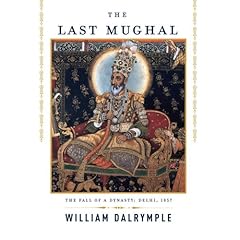
Descendants of the Mughal emperors, in early 1800s, were paid their upkeep by a magnanimous British East India Company. A Mughal prince got a monthy allowance of Rs.12 a month, which wasn’t more than the wages a head servant in any sahib’s household those days. William Dalrymple’s ‘The Last Mughal’ gives a fascinating account of the life and times during the Raj.
A sampler from excerpt of the book published in California Literary Review
Delhi College, a madarsa under the Mughals, was remodeled by the Company in 1828 “to uplift the uneducated and half-barbarous people of India”. The man behind this good work was Charles Trevelyan, brother-in-law of Thomas Babingdon Macaulay, whose minute declared that “a single shelf of a good European library was worth the whole native literature of India and Arabia”… The historical information which has been collected from all the books written in the Sanscrit language is less valuable than what may be found in the most paltry abridgments used at preparatory schools in England . . . The languages of Western Europe civilized Russia. I cannot doubt that they will do for the Hindoo what they have done for the Tartar.
In striking contrast to his three notably dressy younger brothers, Mirzas Jahangir, Salim and Babur, Bahadur Shah Zafar (1775-1838) was a man of spare figure and stature, plainly apparelled, almost approaching to meanness, reported Major Archer in 1828, when Zafar was fifty-three, and still a decade away from succeeding to the throne. “His appearance was that of an indigent munshi, or teacher of languages.”
When one of his followers was bitten by a snake, Zafar attempted to cure him by sending “a Seal of Bezoar [a stone antidote to poison] and some water on which he had breathed,” and giving it to the man to drink.. .The Emperor also had a great belief in charms, or ta’wiz, especially as a palliative for his perennial complaint of piles, or to ward off evil spells.
To read more of the excerpt access California Literary Review.
Sunday, April 15, 2007
Are women in media over-empowered ?
I know this is a loaded question, prompted by a statement in S R Madhu's talk to the Joint Action Council for Women that met in Chennai last month. He believes there is a strong connection between women's media and their empowerment. Full text of his engaging talk appears in a blog by Madhu's young journalist friend Alaphia Zoyab. Bloggers like Ms Zoyab, to my mind, can work at securing equal empowerment of non-media women.
Their target group ought to be middle-class urban career women, who, seen as liberated in economic terms may not be so empowered in their domestic situation. Empowerment of rural women may well take a generation or two to be realised. Media women are a class apart.
They are perhaps the most empowered of the lot. So much, in fact, that if the likes of Ms Kakaria have their way, women's empowerment in the media may well become a threat to many men hoping to get into the media. Mr Madhu in his talk on 'Women and the Media' gives profiles-in-brief of the empowered such as Anita Pratap (ex-CNN), Madhu Kishwar (editor, Manushi), Barkha Dutt (needs no intro), Mrinal Pande (editor, Hindustan), Sucheta Dalal (finance columnist, and more), and Bachi Kakaria (Times of India)
As Sunday Times of India feature writer, Ms Kakaria used to send me memos (then, a TOI outstation correspondent) asking for 300-word input for articles she was working on. She was in an empowered position of aggregating, editing, clubbing-with, and, at times, ignoring, inputs received from various correspondents. The resultant feature articles got a full-page play with Bachi's byline. Of course, they acknowledged our input, at the bottom of the story, in italics; almost as an after-thought. I suspect such inputs-driven Sunday features were invented by editors to promote their blue-eyed ones in the organization; and to hassle outstation reporters such as yours truly.
I am not blaming Ms Kakaria, merely making a point about how empowered women can get. Mr Madhu's talk cites Ms Kakaria as saying, "the women we interview for jobs are so much better than men, that sometimes we take a man just as a token gesture for men". Her message for women in the media: Stop thinking gender; think only professional.
They have evidently come a long, log way, women in media. There was a time when newspaper editors would not think of having a woman on their staff. Speaking of the status of women on the media scene in the 60s Madhu cites the case of Rami Chhabra, who, seeking a job on The Statesman, Calcutta, was told by editor Prem Bhatia, "Young lady, if you want to work in a daily, wipe off that lipstick and remove those ear-rings. Pretty girls shouldn't be in newspaper offices. They distract the men."
Pran Chopra reportedly turned down Razia Ismail for a job saying, "I'm sure you would refuse to do night shifts". This was a legitimate concern of editors those days. In the initial days when a few women got into newspapers, usually because of high connections (being daughters of high government officials or editors in other newspapers) editors didn't give women the night shift. Which caused resentment among men, because their turn for late-night week came quicker on the duty roster. Unable to take flak from male peers, some women in newspapers, feeling uncomfortable with favoured treatment, have in fact insisted on they being given night shifts, just as their male colleagues. Razia, I knew, joined Indian Express, New Delhi.
Madhu's address on women in our media refers to Barkha Dutt, a hotshot TV reporter from 24x7. I can't help feeling that her go-getter reputation has something to do with her genes. Barkha's mother was a reporter with Hindustan Times, New Delhi. Those familiar with Prabha Behl (before her marriage with S P Dutt) knew her to be combative in chasing stories, fairly vocal at press conferences, and friendly with other reporters. She had a wavelength with those of us in other papers; and usually addressed us, male or female, as 'yaar'. Prabha rose to be the chief reporter, Hindustan Times. She died young
This piece also appears in Desicritic
Their target group ought to be middle-class urban career women, who, seen as liberated in economic terms may not be so empowered in their domestic situation. Empowerment of rural women may well take a generation or two to be realised. Media women are a class apart.
They are perhaps the most empowered of the lot. So much, in fact, that if the likes of Ms Kakaria have their way, women's empowerment in the media may well become a threat to many men hoping to get into the media. Mr Madhu in his talk on 'Women and the Media' gives profiles-in-brief of the empowered such as Anita Pratap (ex-CNN), Madhu Kishwar (editor, Manushi), Barkha Dutt (needs no intro), Mrinal Pande (editor, Hindustan), Sucheta Dalal (finance columnist, and more), and Bachi Kakaria (Times of India)
As Sunday Times of India feature writer, Ms Kakaria used to send me memos (then, a TOI outstation correspondent) asking for 300-word input for articles she was working on. She was in an empowered position of aggregating, editing, clubbing-with, and, at times, ignoring, inputs received from various correspondents. The resultant feature articles got a full-page play with Bachi's byline. Of course, they acknowledged our input, at the bottom of the story, in italics; almost as an after-thought. I suspect such inputs-driven Sunday features were invented by editors to promote their blue-eyed ones in the organization; and to hassle outstation reporters such as yours truly.
I am not blaming Ms Kakaria, merely making a point about how empowered women can get. Mr Madhu's talk cites Ms Kakaria as saying, "the women we interview for jobs are so much better than men, that sometimes we take a man just as a token gesture for men". Her message for women in the media: Stop thinking gender; think only professional.
They have evidently come a long, log way, women in media. There was a time when newspaper editors would not think of having a woman on their staff. Speaking of the status of women on the media scene in the 60s Madhu cites the case of Rami Chhabra, who, seeking a job on The Statesman, Calcutta, was told by editor Prem Bhatia, "Young lady, if you want to work in a daily, wipe off that lipstick and remove those ear-rings. Pretty girls shouldn't be in newspaper offices. They distract the men."
Pran Chopra reportedly turned down Razia Ismail for a job saying, "I'm sure you would refuse to do night shifts". This was a legitimate concern of editors those days. In the initial days when a few women got into newspapers, usually because of high connections (being daughters of high government officials or editors in other newspapers) editors didn't give women the night shift. Which caused resentment among men, because their turn for late-night week came quicker on the duty roster. Unable to take flak from male peers, some women in newspapers, feeling uncomfortable with favoured treatment, have in fact insisted on they being given night shifts, just as their male colleagues. Razia, I knew, joined Indian Express, New Delhi.
Madhu's address on women in our media refers to Barkha Dutt, a hotshot TV reporter from 24x7. I can't help feeling that her go-getter reputation has something to do with her genes. Barkha's mother was a reporter with Hindustan Times, New Delhi. Those familiar with Prabha Behl (before her marriage with S P Dutt) knew her to be combative in chasing stories, fairly vocal at press conferences, and friendly with other reporters. She had a wavelength with those of us in other papers; and usually addressed us, male or female, as 'yaar'. Prabha rose to be the chief reporter, Hindustan Times. She died young
This piece also appears in Desicritic
Saturday, April 07, 2007
Gaping holes on water tank; who pays for the damage ?
It is all very well for Karnataka Chief Minister H D Krishnaswamy to talk tough to non-performing officers, warning them of stern action. Our media works into the story well-worn clichés - 'taking officials to task', not tolerating 'lackadaisical attitude', and action against officials who don't 'pull up their socks'- to make CM appear a no-nonsense guy.
The media knows, as well as anyone else, that politicians play to the gallery. And Mr Krishnaswamy, or anyone else in his position, ought to know that government officials are relatively immune to such threats. Their service rules and self-serving official procedure ensure government employees are insulated from ruling party threats that are, at times, held out by political leaders for public consumption.
If anything, the political executive has limited powers in comparison to the bureaucracy and the police. As they say, a chief minister does not even enjoy the powers that a police inspector does. A chief minister can't order anyone's arrest; something a police officer does in as a routine.
The snag is, in any government, there are a few officials willing to do the biddings of political bosses. A minister, ruling party district secretary or MLA often gets done things that are not within their ambit of power, with the help of obliging officials. Immediate provocation for Indira Gandhi to declare Emergency in 1975 was Jai Prakash Narayan's call to the police force not to obey illegal orders of those in power; and to insist on getting all their orders in writing from their higher-ups.
On the flipside is the apparent inability of CM and other ministers to hold officials accountable for their lapses. Take the case of contaminated central water storage tank that supplies drinking water to Mysore city. The storage tank has been in a state of neglect for the last six years, according to media reports. The water storage tank would have continued to remain uncared for, if it were not for a civic initiative that exposed this monumental neglect by officials.
According to Mr A Ramdas, a former MLA who led the civic initiative, concrete roofing of this massive underground tank has gaping holes, exposing the stored water to contamination through fallen debris, floating remains of dead birds and an outgrowth of weeds.
The city corporation commissioner, who has moved in the wake of media exposure, to do damage control and clean up the tank, ought to explain how such blatant lapse by the maintenance staff had gone unnoticed for so many years. Would the tough-talking CM or the minister concerned take steps to identify officials responsible for having neglected the upkeep of the water storage tank for so long?
Departmental action apart, a CM concerned about streamlining the administration ought to address the issue of material damge. Is there a provision (or shouldn't there be?) in the service rules of government officials for fixing individual liability for the material damage caused to the water storage tank? Shouldn't such damage be quantified and the computed amount collected from non-performing officials concerned ?
The media knows, as well as anyone else, that politicians play to the gallery. And Mr Krishnaswamy, or anyone else in his position, ought to know that government officials are relatively immune to such threats. Their service rules and self-serving official procedure ensure government employees are insulated from ruling party threats that are, at times, held out by political leaders for public consumption.
If anything, the political executive has limited powers in comparison to the bureaucracy and the police. As they say, a chief minister does not even enjoy the powers that a police inspector does. A chief minister can't order anyone's arrest; something a police officer does in as a routine.
The snag is, in any government, there are a few officials willing to do the biddings of political bosses. A minister, ruling party district secretary or MLA often gets done things that are not within their ambit of power, with the help of obliging officials. Immediate provocation for Indira Gandhi to declare Emergency in 1975 was Jai Prakash Narayan's call to the police force not to obey illegal orders of those in power; and to insist on getting all their orders in writing from their higher-ups.
On the flipside is the apparent inability of CM and other ministers to hold officials accountable for their lapses. Take the case of contaminated central water storage tank that supplies drinking water to Mysore city. The storage tank has been in a state of neglect for the last six years, according to media reports. The water storage tank would have continued to remain uncared for, if it were not for a civic initiative that exposed this monumental neglect by officials.
According to Mr A Ramdas, a former MLA who led the civic initiative, concrete roofing of this massive underground tank has gaping holes, exposing the stored water to contamination through fallen debris, floating remains of dead birds and an outgrowth of weeds.
The city corporation commissioner, who has moved in the wake of media exposure, to do damage control and clean up the tank, ought to explain how such blatant lapse by the maintenance staff had gone unnoticed for so many years. Would the tough-talking CM or the minister concerned take steps to identify officials responsible for having neglected the upkeep of the water storage tank for so long?
Departmental action apart, a CM concerned about streamlining the administration ought to address the issue of material damge. Is there a provision (or shouldn't there be?) in the service rules of government officials for fixing individual liability for the material damage caused to the water storage tank? Shouldn't such damage be quantified and the computed amount collected from non-performing officials concerned ?
Tuesday, March 27, 2007
Cricket: There’s life after World Cup for Team India
Let’s look at the positives. We beat Bermuda, didn’t we? Why not build on this win. Let’s now try out Outer Mongolia (trust they have a cricket team), and thus, strike a winning streak. I don’t see the great idea in India playing the same teams – Sri Lanka, Australia, Pakistan etc. – year after year. If Indian cricket has to survive (for the benefit of sponsors and live telecast right-holders) we need to look at fresh pastures beyond our sub-continent.
We under-rated Bangladesh, which has been one of our unfailing failures. It is time India started playing sure winnables. I already mentioned Outer Mongolia. We could tour Indonesia, Malaysia, Burma and Brunei. That would be a morale booster, and give our boys the feel of victory, so that our team members can come home to a grand airport reception. This time I visualise our team flying home from Jamaica, on a late night flight, and be whisked away from the airport by the personnel on bandobast duty.
Speaking of airport receptions, newspapers carry a photo of Pak team transiting London’s Heathrow under police escort, presumably, to guard them from being ambushed by enraged fans. Heathrow has a sizeable staff strength of Asians, including Pakistanis. I guess, there is scope for bilateral exchanges with Pakistan on ways to improve cricketing fortunes to the mutual benefit of both countries. I don’t mean we play a World Cup losers’ Cup tie. In fact, an India-Pakistan series at this time would not be a good idea. If only because, we can’t ensure that neither India nor Pakistan lost any match. We could resort to match-fixing by which every tie is made to end in a draw.
I have an out-of-the-box idea. Let us hold a joint selection camp of cricket players from both India and Pakistan; split the top 22 into two opposing teams, comprising players chosen irrespective of their national colours. In fact, the ‘blues’ and ‘greens’ on the field would be replaced with plain old white, the only colour our old-fashioned cricketers knew.
Speaking of old-fashioned cricketers, the opposing teams should be led by legends such as Zaheer Abbas and Sunil Gavaskar, as non-playing captains. We could call it the Sadbhavana Cup. Legend has it that during an India-Pak tie when Abbas got into a seemingly unending run-spree, the then India captain, Sunil Gavaskar walked up to him to say, “Zaheer bhai, Ab-bas karo”.
Zaheer Abbas, interviewed on an Indian sports TV channel, didn’t confirm this story, but said that Sunil was his good friend. So was Bishen Singh Bedi. During their tours overseas both team members socialized. Zaheer recalled the match in which he completed 100 centuries. That evening Zaheer hosted a party – “every member of the Indian team I invited turned up at the party”.
Former Pak captain, referring to an India tour of Pakistan, said he didn’t sleep during the entire five weeks of the tour. Indian bowling trio, said Zaheer Abbas, was so much on his mind that he spent sleepless nights thinking of ways to cope with Bedi, Prasanna and Chandrasekhar.
We under-rated Bangladesh, which has been one of our unfailing failures. It is time India started playing sure winnables. I already mentioned Outer Mongolia. We could tour Indonesia, Malaysia, Burma and Brunei. That would be a morale booster, and give our boys the feel of victory, so that our team members can come home to a grand airport reception. This time I visualise our team flying home from Jamaica, on a late night flight, and be whisked away from the airport by the personnel on bandobast duty.
Speaking of airport receptions, newspapers carry a photo of Pak team transiting London’s Heathrow under police escort, presumably, to guard them from being ambushed by enraged fans. Heathrow has a sizeable staff strength of Asians, including Pakistanis. I guess, there is scope for bilateral exchanges with Pakistan on ways to improve cricketing fortunes to the mutual benefit of both countries. I don’t mean we play a World Cup losers’ Cup tie. In fact, an India-Pakistan series at this time would not be a good idea. If only because, we can’t ensure that neither India nor Pakistan lost any match. We could resort to match-fixing by which every tie is made to end in a draw.
I have an out-of-the-box idea. Let us hold a joint selection camp of cricket players from both India and Pakistan; split the top 22 into two opposing teams, comprising players chosen irrespective of their national colours. In fact, the ‘blues’ and ‘greens’ on the field would be replaced with plain old white, the only colour our old-fashioned cricketers knew.
Speaking of old-fashioned cricketers, the opposing teams should be led by legends such as Zaheer Abbas and Sunil Gavaskar, as non-playing captains. We could call it the Sadbhavana Cup. Legend has it that during an India-Pak tie when Abbas got into a seemingly unending run-spree, the then India captain, Sunil Gavaskar walked up to him to say, “Zaheer bhai, Ab-bas karo”.
Zaheer Abbas, interviewed on an Indian sports TV channel, didn’t confirm this story, but said that Sunil was his good friend. So was Bishen Singh Bedi. During their tours overseas both team members socialized. Zaheer recalled the match in which he completed 100 centuries. That evening Zaheer hosted a party – “every member of the Indian team I invited turned up at the party”.
Former Pak captain, referring to an India tour of Pakistan, said he didn’t sleep during the entire five weeks of the tour. Indian bowling trio, said Zaheer Abbas, was so much on his mind that he spent sleepless nights thinking of ways to cope with Bedi, Prasanna and Chandrasekhar.
Saturday, March 24, 2007
Catalyst on Water
Dr Bhamy Shenoy has mailed the following note on Catalyst magazine, an NRI initiative, that devotes its current issue to Water.
Four years ago, some residents of Chennai were leaving town due to water shortage. The Hindu, in an article 4 months ago, said Chennai had too much water now. If you open the city corporation tap, water actually comes out, instead of plain hot air four years ago.
A contributing factor in Chennai’s transformation is Rain Water Harvesting. We still (in Chennai) have a long way to go in order to ‘mainstream’ rainwater harvesting in our daily life. Other southern states have followed the lead taken by Tamil Nadu.
Water for life and water for livelihoods’ is the maxim expressed in the 2006 United Nations Development Programme’s (UNDP) Human Development Report (HDR). Water insecurity violates the basic principles of social justice. Access to water is a basic human need and fundamental human right, yet more than one billion people worldwide are denied the right to clean water. Water pervades all aspects of human development; when people do not have access to clean water their choices and freedoms are constrained by ill health, poverty and vulnerability. Thus, water gives life to everything, including human development.(“Jal hai, to kal hai” in Hindi means “If you have water, you have a tomorrow”)
Catalyst for Human Development’s latest Water issue has articles ranging from sustainable rural water management to rainwater harvesting. You can DOWNLOAD the full PDF file (5.9 Meg) at www.afhd.org . If you need printed copies, details are given in the magazine. You may contact editor at editor@afhd.org with any questions or comments
Tuesday, March 20, 2007
Scrapbook Jottings–4
JFK killing wire copy: Associated Press story sent to newspapers through teleprinter sold at a New York auction in March 1997. Seven-foot paper roll of AP story, giving a moment-to-moment account of the first 90 minutes after the JFK killing (Nov.22, 1963, at Dalles) fetched $10,000, for a disabled Vietnam veteran Donald Zammit, who had found the wire copy in an envelope after his father’s death.
Newspapermen: Most of what they do is superficial, out of balance, prejudicial when they claim impartiality, and riddled with inaccuracies. They blame inaccuracies on an obsession with speed, which is used the way a cripple uses a crutch. Being slower, checking facts before they storm into print might be better public service. They are critics, self-appointed judges of everybody’s failings except their own. (Do not know who said this, where, when and in which context.)
Newspapermen: Most of what they do is superficial, out of balance, prejudicial when they claim impartiality, and riddled with inaccuracies. They blame inaccuracies on an obsession with speed, which is used the way a cripple uses a crutch. Being slower, checking facts before they storm into print might be better public service. They are critics, self-appointed judges of everybody’s failings except their own. (Do not know who said this, where, when and in which context.)
Friday, March 02, 2007
Peru, India and the punctuality drive
It was Ecuador in 2003. and it is Peru today that is poised to combat chronic lateness. The Latin American late-running nation has launched a punctuality drive. After hearing the news on the BBC, I wondered when, if at all, we in India would look at chronic lateness as a serious issue.
I have been flogging this message on the web ever since I read in 2004 a New Yorker piece on the campaign in Ecuador. The magazine feature - Punctuality Pays - said, "At high noon last October 1, the citizens of Ecuador did something they'd never dreamed possible, they synchronized their watches". They did four other things:
1) Ran a nationwide poster campaign to convey the message that punctuality pays
2)Public and private institutions - from local councils to major industries - took a pledge to keep time
3) Late-comers were turned away from offices and factories, with placards reading 'Don't Enter; Work Started on Time'
4) And newspapers published everyday a list of dignitaries and public officials who turned up late at public events.
Peru, emulating Ecuador, has clocked in its drive - 'Peru on Time'. At noon on March 1, President Alan Garcia sounded a bell signaling the nation's 28 million people to synchronize their watches. Peru and punctuality have been incompatible; and chronic lateness was often overlooked by Peruvians who considered it an endearing cultural trait.
How Indian, I thought. It's in fact also a very Mysorean trait.
Another similarity between the two countries: nothing in Peru - wedding reception, funeral, social dinner or a business meeting - ever starts on time. Travel guides for western tourists observe that Peruvians expect friends to be late for an appointment.
So tourist brochures advise foreign visitors, rather thoughtfully, not to arrange to meet a Peruvian on a street corner - make it a café or bar. If, for some obscure reason, you want someone in Lima to turn up on time, you will be well advised to stipulate that the meeting is a la hora inglesa (by the English time).
Peru has now officially declared that to be late would no longer be fashionable. The Forum of National Consensus, a government-led council of business and citizens' groups, which is steering the campaign has directed schools, businesses and government offices to stop tolerating 'Peruvian Time", which usually means an hour's lateness. We have such close commonality in our bad habits, Peru and India.
Peru has chosen to do something about it. When will we in India do the same? For a start, wouldn't you like to see our media and corporates sponsor a public interest message recognizing punctuality as a civic virtue that represents respect for the other person's time?
--------------------
This piece is cross-filed in Desicritics; and evoked following comments:
Karthik
I understand your concern for this cultural level change. Unfortunately going from A to B involves lot of challenges! Bus, traffic, political rallies. People get used to this and becomes a habit. Make no mistake. I am not justifying this. I am all for coming on time. But it is upto the individual to correct himself in a country like India. Nationwide changes require the concerned people to lead by example which they are never going to do. I myself am guilty of being a little late for some unimportant events. But things like interviews, meetings i am always ahead of time.
Ashish
Oh, to be late is an institutional thing in India. If you are invited for a wedding and the time says 8 PM, and you reach there at 8, you could literally help in setting the place up.
In fact, at my marriage, the whole procession reached around 30 minutes after the written time, and my bride also was not ready since no one expects the groom's party to arrive anywhere near time :-)
bharath
why is punctuality a human virtue? Its likely to help machines when they synchronize activities, communication, etc.
all those poems written about waiting, a waste? :)
I have been flogging this message on the web ever since I read in 2004 a New Yorker piece on the campaign in Ecuador. The magazine feature - Punctuality Pays - said, "At high noon last October 1, the citizens of Ecuador did something they'd never dreamed possible, they synchronized their watches". They did four other things:
1) Ran a nationwide poster campaign to convey the message that punctuality pays
2)Public and private institutions - from local councils to major industries - took a pledge to keep time
3) Late-comers were turned away from offices and factories, with placards reading 'Don't Enter; Work Started on Time'
4) And newspapers published everyday a list of dignitaries and public officials who turned up late at public events.
Peru, emulating Ecuador, has clocked in its drive - 'Peru on Time'. At noon on March 1, President Alan Garcia sounded a bell signaling the nation's 28 million people to synchronize their watches. Peru and punctuality have been incompatible; and chronic lateness was often overlooked by Peruvians who considered it an endearing cultural trait.
How Indian, I thought. It's in fact also a very Mysorean trait.
Another similarity between the two countries: nothing in Peru - wedding reception, funeral, social dinner or a business meeting - ever starts on time. Travel guides for western tourists observe that Peruvians expect friends to be late for an appointment.
So tourist brochures advise foreign visitors, rather thoughtfully, not to arrange to meet a Peruvian on a street corner - make it a café or bar. If, for some obscure reason, you want someone in Lima to turn up on time, you will be well advised to stipulate that the meeting is a la hora inglesa (by the English time).
Peru has now officially declared that to be late would no longer be fashionable. The Forum of National Consensus, a government-led council of business and citizens' groups, which is steering the campaign has directed schools, businesses and government offices to stop tolerating 'Peruvian Time", which usually means an hour's lateness. We have such close commonality in our bad habits, Peru and India.
Peru has chosen to do something about it. When will we in India do the same? For a start, wouldn't you like to see our media and corporates sponsor a public interest message recognizing punctuality as a civic virtue that represents respect for the other person's time?
--------------------
This piece is cross-filed in Desicritics; and evoked following comments:
Karthik
I understand your concern for this cultural level change. Unfortunately going from A to B involves lot of challenges! Bus, traffic, political rallies. People get used to this and becomes a habit. Make no mistake. I am not justifying this. I am all for coming on time. But it is upto the individual to correct himself in a country like India. Nationwide changes require the concerned people to lead by example which they are never going to do. I myself am guilty of being a little late for some unimportant events. But things like interviews, meetings i am always ahead of time.
Ashish
Oh, to be late is an institutional thing in India. If you are invited for a wedding and the time says 8 PM, and you reach there at 8, you could literally help in setting the place up.
In fact, at my marriage, the whole procession reached around 30 minutes after the written time, and my bride also was not ready since no one expects the groom's party to arrive anywhere near time :-)
bharath
why is punctuality a human virtue? Its likely to help machines when they synchronize activities, communication, etc.
all those poems written about waiting, a waste? :)
BUG - The Brotherhood of Unwelcome Guests
Desicritic Uma Ranganathan's much-commented piece on an unwelcome guest, inspired me to recycle this piece that was written four years back. But I reckon it will stay valid for the next 400 years. My piece was written in a spirit that if anyone were to be shown in an unflattering light, it better be yours truly in the interest of maintaining domestic harmony. So, here it goes:
Athtiti Devo Bhava. I don't know if such a thing is really in our scriptures or it is just something made up by an inventive mind advocating the cause of the Brotherhood of Uninvited Guests (BUG). Whoever thought of it knew how our middle-class mind works. The three-word sloka is so embedded in our belief system that few of us can bring ourselves to turn away an unwelcome guest who appears unannounced at our doorsteps. You wouldn't want to drive away the Lord, would you?
Someone did just that, to me, in the US. They called the bluff on that devo bhava nonsense. Suffice it to say that those involved was a desi family well known to us. Giving away much more would not be in the interest of my domestic harmony.
It so happened that my wife and I were at loose ends on a Sunday afternoon and so our son took us for a drive. Some 40 minutes out of our home I was told we were close to where this desi family was staying. I suggested we drop in on them.
"Unannounced?" asked my son, "Without as much as a call?"
"Why not?" I thought my son, having stayed in the US for some time now, had forgotten the three words in Sanskrit that would open Indian doors even to strangers. After all, this desi family was so well known to us that they should be happy to see us any time.
My son tried to reason with me. I was firm. My wife didn't say anything, maintaining an enlightened neutrality in a disagreement between father and son.
I prevailed. And as we neared the driveway of our friend's suburban house we noticed the family of four was leaving for some place and the lady of the house was closing their front door. We stepped out of our car and met them on their driveway. They were nice and syrupy, but made no move to ask us in.
"What a surprise," said the lady of the house, "I wish you had called before coming."
I mumbled something to the effect that we had not planned this visit, but decided to drop in, on the spur of the moment. After a few more minutes of small-talk, still on the driveway, we exited as gracefully as we could.
"You must come again," said our host, "we must have a meal together." She was polite, but firm in slamming the door on us.
At our place I let my wife handle a sticky situation by letting her answer the door-bell. I do not intervene in her door-step inquiry into such unwelcome intrusion. I pretend not to hear my wife when she calls me to the door to greet an unannounced visitor. Of course, I sulk and usually take it out on her whenever we are lumbered with a visitor we could very well do without.
An unwelcome guest often gives cause for domestic discord in our otherwise peaceful married life. The snag is, my wife relishes her reputation as a gracious hostess, particularly among fair weather friends and relatives. Such is her hospitality that those who come to our place once would want to come again. I keep reminding my wife, "We are running a household, not a 'Welcomgroup' outfit."
The last 'guest' we had stayed only for a night, mercifully. We have had people coming in groups, including unmanageable children, without as much as a phone call announcing their arrival, and staying for days. Our overnight 'guest' dropped in around 8 pm, and promptly settled into the only rosewood armchair in our living room that doubles as my study. It was not yet our dinner time; it was the time my wife and I spend reading a book or magazine in companionable silence. With our evening so rudely interrupted, my wife went to the kitchen to get dinner ready, leaving me to cope with the lady in the rosewood chair.
I don't remember the details of the small talk we indulged in for the next 15 minutes. But my wife rescued us from what seemed an interminable 15 minutes by announcing dinner. To be fair to the lady, an out-of-towner, she didn't drop in on us unannounced. She gave my wife a few hours notice when they met at a common friend's place earlier in the day. The lady had told my wife she was inviting herself to our place for the night. When my wife sought to explain that things at home were in a mess the lady said, "Don't worry, I will adjust." I thought it was the host who would have adjustment problem in the circumstances.
When it was time for her to leave my wife sent her off with the traditional offering of the kumkum and an invitation to visit us again. My hunch is that the lady took my wife for her words. I don't suppose our guest had any inkling of my smoldering resentment at her for having taken us for granted. .
Cross-filed in Desicritics
Athtiti Devo Bhava. I don't know if such a thing is really in our scriptures or it is just something made up by an inventive mind advocating the cause of the Brotherhood of Uninvited Guests (BUG). Whoever thought of it knew how our middle-class mind works. The three-word sloka is so embedded in our belief system that few of us can bring ourselves to turn away an unwelcome guest who appears unannounced at our doorsteps. You wouldn't want to drive away the Lord, would you?
Someone did just that, to me, in the US. They called the bluff on that devo bhava nonsense. Suffice it to say that those involved was a desi family well known to us. Giving away much more would not be in the interest of my domestic harmony.
It so happened that my wife and I were at loose ends on a Sunday afternoon and so our son took us for a drive. Some 40 minutes out of our home I was told we were close to where this desi family was staying. I suggested we drop in on them.
"Unannounced?" asked my son, "Without as much as a call?"
"Why not?" I thought my son, having stayed in the US for some time now, had forgotten the three words in Sanskrit that would open Indian doors even to strangers. After all, this desi family was so well known to us that they should be happy to see us any time.
My son tried to reason with me. I was firm. My wife didn't say anything, maintaining an enlightened neutrality in a disagreement between father and son.
I prevailed. And as we neared the driveway of our friend's suburban house we noticed the family of four was leaving for some place and the lady of the house was closing their front door. We stepped out of our car and met them on their driveway. They were nice and syrupy, but made no move to ask us in.
"What a surprise," said the lady of the house, "I wish you had called before coming."
I mumbled something to the effect that we had not planned this visit, but decided to drop in, on the spur of the moment. After a few more minutes of small-talk, still on the driveway, we exited as gracefully as we could.
"You must come again," said our host, "we must have a meal together." She was polite, but firm in slamming the door on us.
At our place I let my wife handle a sticky situation by letting her answer the door-bell. I do not intervene in her door-step inquiry into such unwelcome intrusion. I pretend not to hear my wife when she calls me to the door to greet an unannounced visitor. Of course, I sulk and usually take it out on her whenever we are lumbered with a visitor we could very well do without.
An unwelcome guest often gives cause for domestic discord in our otherwise peaceful married life. The snag is, my wife relishes her reputation as a gracious hostess, particularly among fair weather friends and relatives. Such is her hospitality that those who come to our place once would want to come again. I keep reminding my wife, "We are running a household, not a 'Welcomgroup' outfit."
The last 'guest' we had stayed only for a night, mercifully. We have had people coming in groups, including unmanageable children, without as much as a phone call announcing their arrival, and staying for days. Our overnight 'guest' dropped in around 8 pm, and promptly settled into the only rosewood armchair in our living room that doubles as my study. It was not yet our dinner time; it was the time my wife and I spend reading a book or magazine in companionable silence. With our evening so rudely interrupted, my wife went to the kitchen to get dinner ready, leaving me to cope with the lady in the rosewood chair.
I don't remember the details of the small talk we indulged in for the next 15 minutes. But my wife rescued us from what seemed an interminable 15 minutes by announcing dinner. To be fair to the lady, an out-of-towner, she didn't drop in on us unannounced. She gave my wife a few hours notice when they met at a common friend's place earlier in the day. The lady had told my wife she was inviting herself to our place for the night. When my wife sought to explain that things at home were in a mess the lady said, "Don't worry, I will adjust." I thought it was the host who would have adjustment problem in the circumstances.
When it was time for her to leave my wife sent her off with the traditional offering of the kumkum and an invitation to visit us again. My hunch is that the lady took my wife for her words. I don't suppose our guest had any inkling of my smoldering resentment at her for having taken us for granted. .
Cross-filed in Desicritics
Subscribe to:
Posts (Atom)
